
Trust and Friendship: Getting Better Together
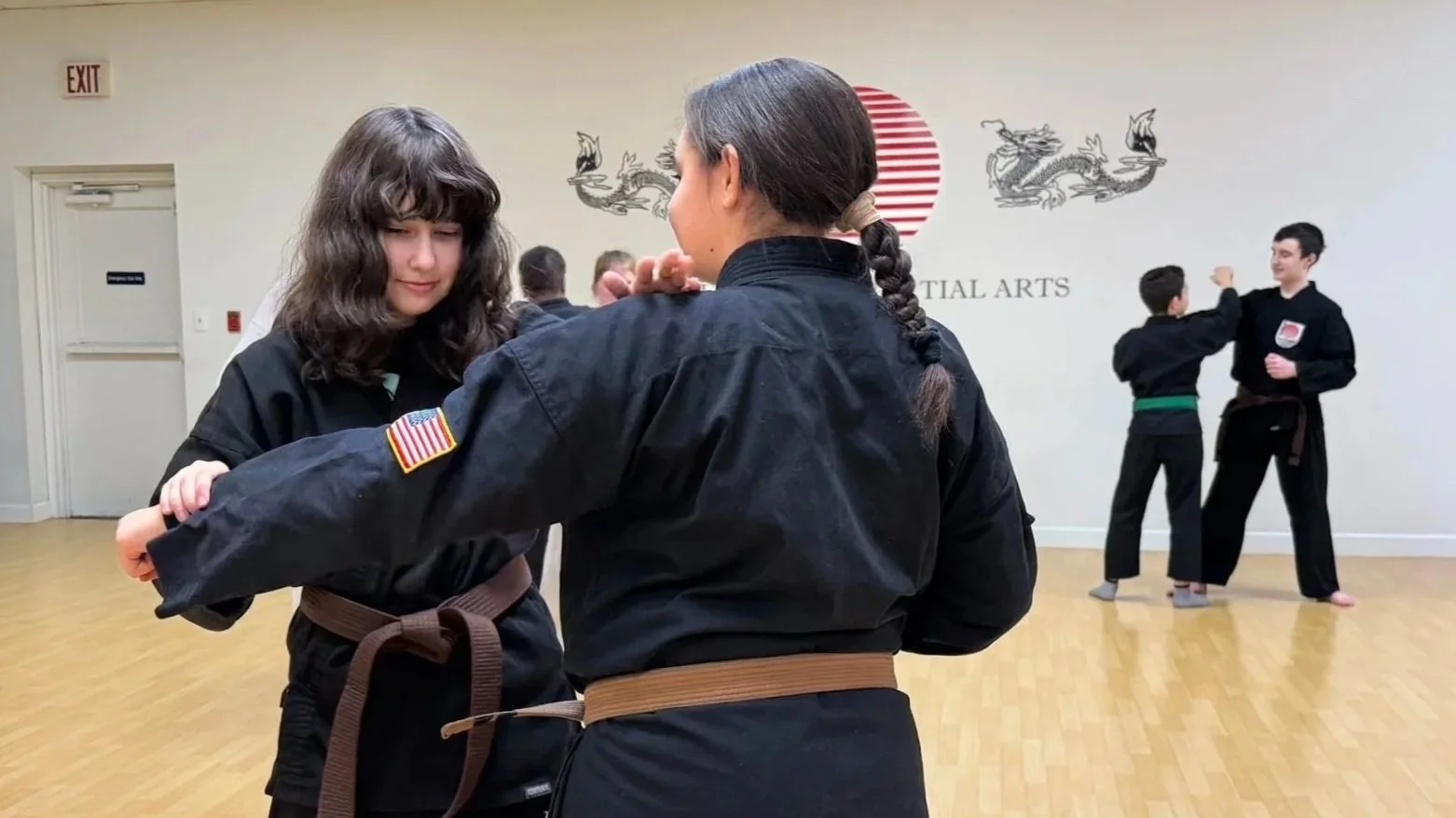
Karate is nominally an individual activity, but you can’t get very good at it on your own. Forms are valuable, but we need instructors and training partners to learn how to apply techniques against real, living opponents. Hence the roles of tori and uke, which we slip into quite naturally. But when you think about it, these roles require an unusual level of trust.
First and most obviously, we trust our training partners with our physical safety. The techniques we learn are inherently dangerous, doubly so if practiced carelessly. To learn kenpo, we have to trust our training partners not to injure us so that we can come back to the dojo again tomorrow.
Second, we trust our training partners to help us grow in the art. The art of receiving a technique properly is called ukemi in Japanese. This “receiving” is neither passive acceptance nor stubborn resistance. It is something in the middle, an attitude that resists enough to force the tori to properly execute the technique but not so much that they cannot practice it. A good uke brings the best version of the technique out of the tori. Every time we drill a technique, we trust our uke to help us get better.
Third, we trust our training partners to support us when we fall short. Consciously or not, when we do karate we are sharing parts of ourselves with each other. We are exposing something we’ve worked hard at—be it a form, combination, or kenpo technique—to criticism. Of course, when necessary, our feedback should be direct and honest. But it should also be kind and constructive. The dojo should be an environment where nobody is out to put each other down. On the contrary, we should all be here to help each other get better at karate. In other words, it should be the kind of place where we can trust that our training partners want what’s best for us.
In all sorts of ways, when we walk into the dojo we are vulnerable. What lets us relax and have fun notwithstanding that vulnerability is that we trust each other. And once we trust each other, we are on the way to being friends with each other.
A good friend is your moral uke. They push you to be better, but they’re also there to pick up when you fall down. They see the best in you and challenge you to live up to it while supporting you along the way. If you can do the same for them then you’ll both be better people for it, much the same way that good training partners make each other better at karate.
I have always found that the easy trust we build in the dojo makes for solid friendships. I met some of my oldest friends there. Karate is fun on its own, but, like everything else in life, it’s a lot more fun if you do it with friends. So the next time you’re at the dojo, look for friends among the people around you. With any luck, you’ll find something more valuable than any kenpo technique.