Knowledge: Demystifying the Obscure
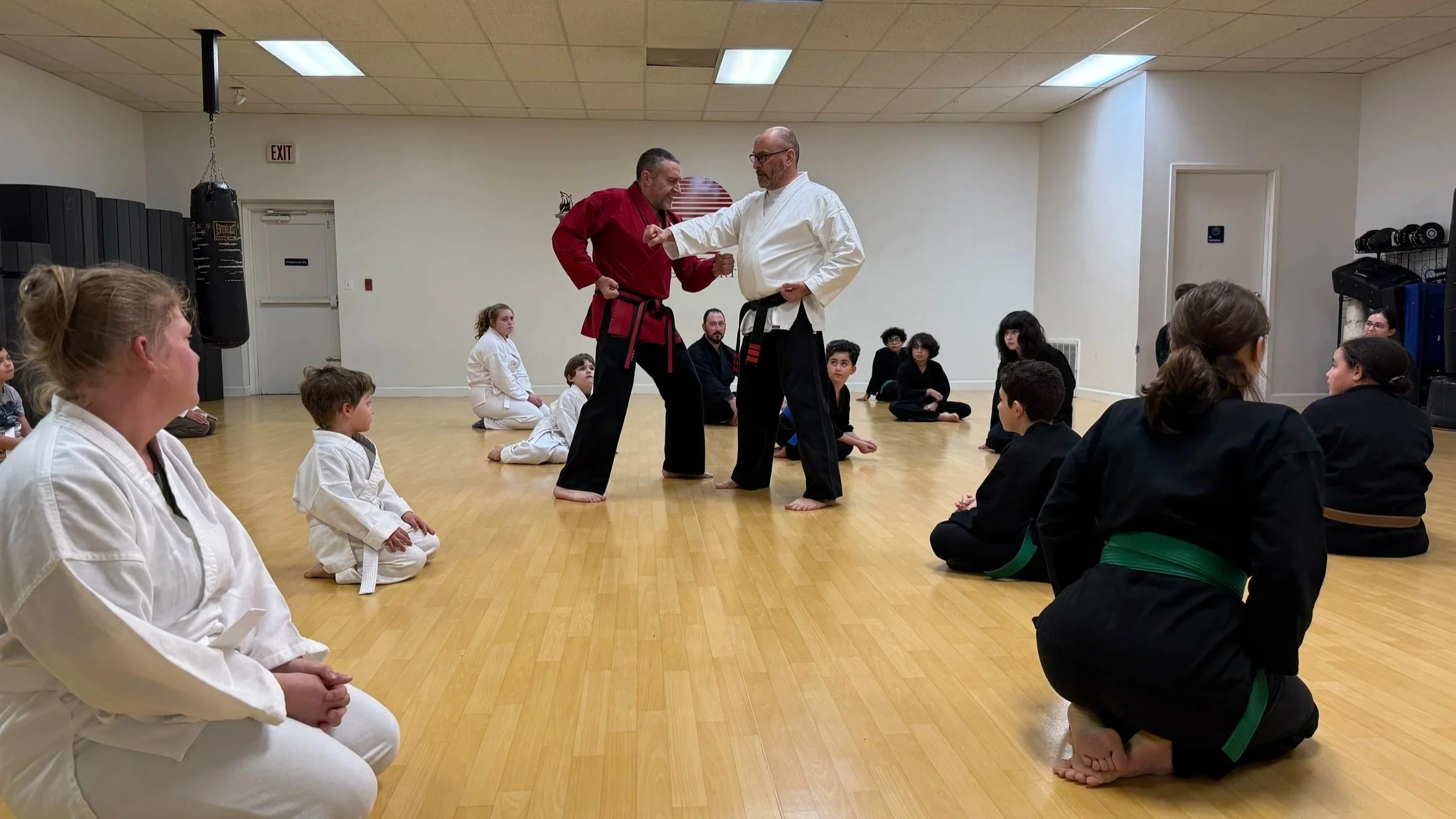
When I was a boy at the IKS, my instructors’ abilities seemed superhuman. Even when they performed basic techniques, they had a certain something that I didn’t.
Over time, the gap narrowed, and I learned that there was nothing mysterious about their abilities. There were just a lot of little things done right. When my younger self looked at a front-two-knuckle punch, I saw a fist flying through the air. When my black belt self looked at a front-two-knuckle punch, I saw a strong stance from which to generate rotation in the hips, a straight wrist supporting a properly formed fist, and a hard internal rotation of the arm just before the moment of impact to generate snap. These details are invisible to the untrained eye, but when combined they produce a black belt’s front-two-knuckle punch.
A well-executed kenpo technique looks like magic to a beginner because the beginner only sees the result. An experienced practitioner sees the process. This is the chief effect of acquiring knowledge: to demystify what seems like magic.
Note that true knowledge has very little to do with rote memorization; one can remember quite a lot but know very little. A person with a good memory and lots of time to spare could learn the sequences of all the forms in our curriculum in a matter of a few weeks. But this would not make them a black belt. The reason you spend so much time at each belt is not because it takes so long to learn a belt’s worth of material. It is because memorizing material isn’t enough to know it. Knowing material requires time, care, and attention. It means understanding how each move fits together, why we do it this way rather than that, and, ultimately, what the technique is trying to teach you.
Knowledge turns what looks like magic into something that we can understand, refine, and control. But control, as always, gives us a choice. Once we’ve put in the hard hours of practice to obtain knowledge, we can either keep it for ourselves or give it away. It can be tempting to keep something that was so hard to earn, but let me suggest that this is one treasure you shouldn’t keep in your pocket.
First, the ultimate test of your knowledge is whether or not you can teach something to a beginner. If you can’t explain something to a beginner in terms that they can understand and perform (however imperfectly), then you don’t really know it. Teaching is an effective, if sometimes embarrassing way to expose gaps. You can’t fill gaps if you don’t know about them, and you won’t learn about them if you don’t teach.
Second, we all learn more when we all teach more. A good teacher doesn’t just pass information to their student; they equip them with the tools to acquire new information on their own. One day, if you’re lucky, you’ll come to class and find your student doing something that you never taught them. Something that, in fact, no one ever taught them, because it is as unique to them as their fingerprint. Then, they can even begin to teach you. Such is the power of knowledge.